
- Developed scalable backend architecture and RESTful APIs using Django and gRPC to optimize high-traffic systems.
- Managed cloud-based application on AWS using Docker containers, achieving 99.9% uptime and streamlined scaling.
- Administered PostgreSQL databases and designed relational schemas, improving query performance and data storage.
- Implemented CI/CD pipelines with Jenkins to automate deployment workflows and accelerate software releases.
Firat Adem Bilge
I build distributed systems that work at real scale: a production big-data platform processing 600+ TB with Dask on a 300+ node Kubernetes cluster, real-time streaming with Kafka, and ML models shipped to production environments at global scale across diverse industry domains. Author of a peer-reviewed computer vision paper (SIViP, 2024).
A Bit About Me
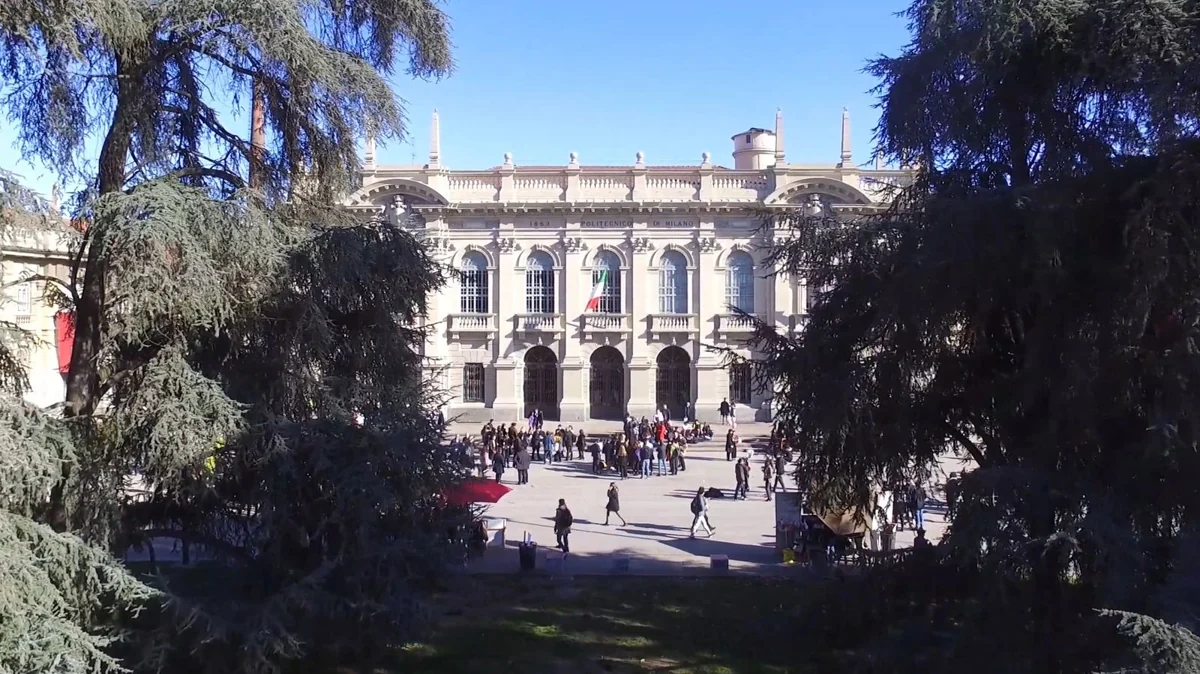
I am a software engineer and Master's student in Computer Science and Engineering at Politecnico di Milano. I like building software that works beyond demos and handles real users, data, and scale.
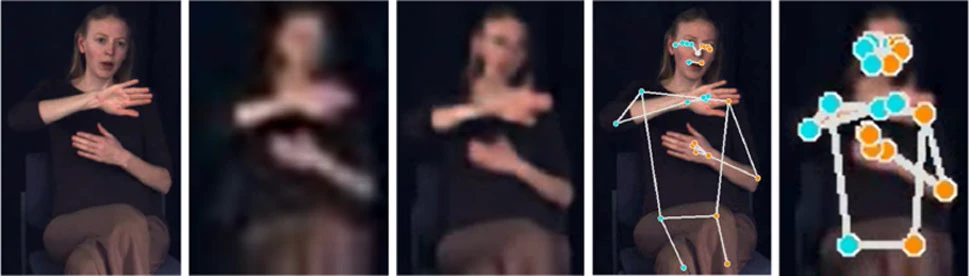
My background sits between backend engineering, cloud infrastructure, big data, and machine learning. I have worked on distributed data processing with Dask, containerized microservices on large Kubernetes clusters, real-time streaming with Kafka, and low-latency services with gRPC. I also spent time on computer vision projects, including a production fingerprint segmentation model and a publication on low-resolution sign language recognition in SIViP.
I enjoy combining practical engineering with research-minded thinking: understanding the problem deeply, choosing simple tools when they are enough, and using advanced systems when the product truly needs them.
Building the Future
Professional roles focused on scalable systems and production software.
- Developed a distributed computing platform on Linux using Dask to process analytical workloads on 600 TB+ data.
- Operated Docker services on a Kubernetes cluster across 300+ production nodes for maintaining high availability.
- Developed gRPC microservices and Kafka pipelines to enable low-latency and fault-tolerant service communication.
- Built observability solutions using Prometheus, Grafana, and Elasticsearch to improve monitoring and diagnostics.
Tech Stack
- Architected a computer vision model for fingerprint segmentation using PyTorch to support biometric identification.
- Optimized model performance through data augmentation techniques and systematic hyperparameter tuning.
- Built image preprocessing pipelines using OpenCV to enhance data quality for model training and evaluation.
- Delivered a production-ready fingerprint identification solution achieving 92% accuracy with an automated workflow.
Tech Stack
- Developed backend services for a messaging platform using FastAPI and WebSockets, enabling low-latency messaging.
- Optimized MySQL database performance through indexing and schema design to improve application responsiveness.
- Managed AWS deployments and implemented CI/CD pipelines to streamline software delivery and release processes.
Tech Stack
Featured Work
Portfolio projects showcasing my work across backend, cloud and AI engineering.
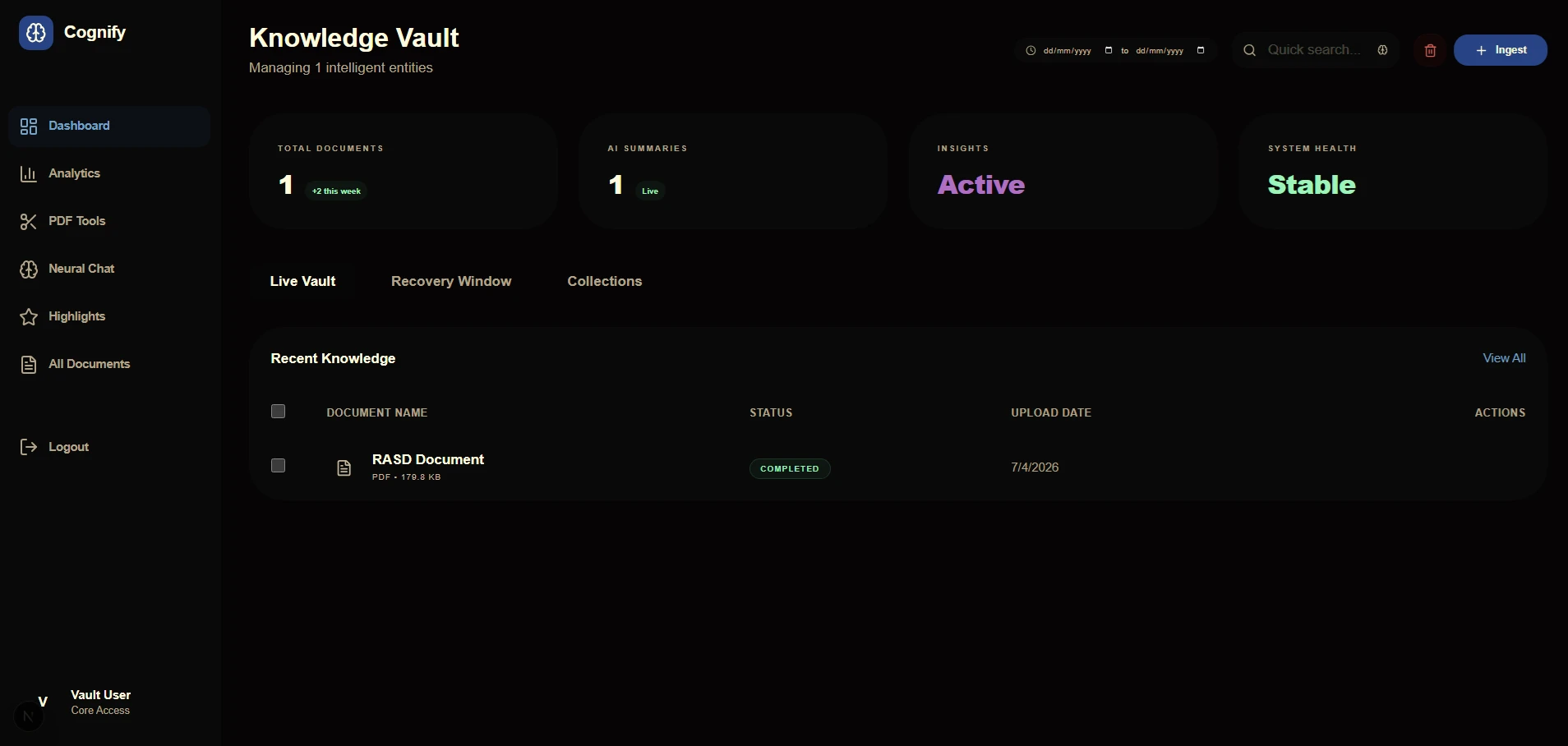
Cognify is a full-stack personal knowledge management system — a second brain that actually reads your documents. Instead of manually tagging and filing notes, you drop in scanned PDFs, images, or plain-text files and an asynchronous Celery worker pipeline handles the rest: OpenCV preprocessing and Tesseract OCR extract text, DistilBART generates concise summaries, a zero-shot MNLI classifier auto-tags topics, and Sentence-BERT stores semantic embeddings — making every document instantly searchable and analyzable.
On the frontend, a Next.js 16 dashboard provides a knowledge vault overview, Recharts-powered analytics, browser-native PDF tools (split, merge, reorder), document versioning with parent-child lineage, per-document sensitive mode, soft-delete recovery, and a global RAG chat where RoBERTa generates cited answers from the most relevant chunks in your vault. The Django REST backend enforces JWT authentication, user-scoped data isolation on every query, audit logging for all actions, and Prometheus metrics for worker latency.
Key Capabilities
- Full ingestion pipeline: upload → OCR → summarize → classify → embed → COMPLETED
- Cosine similarity search finds meaning across documents, not just keyword matches
- Collections, annotations, bookmarks, and notes attached to any document or quote
- 35 automated tests, Docker Compose orchestration, MIT licensed
Tech Stack
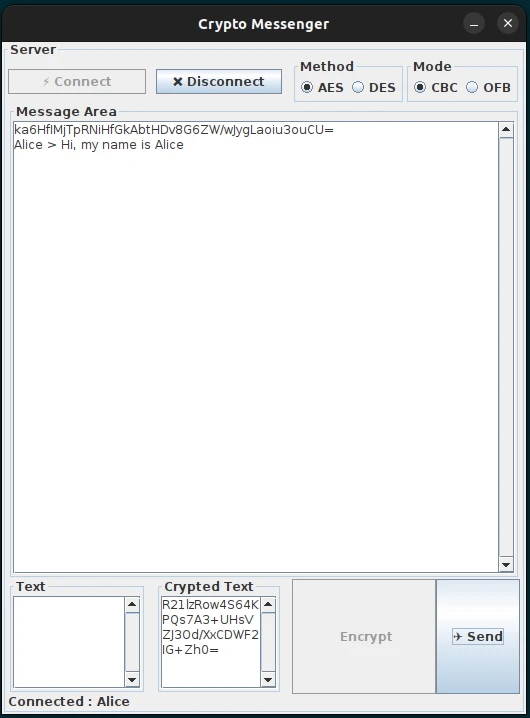
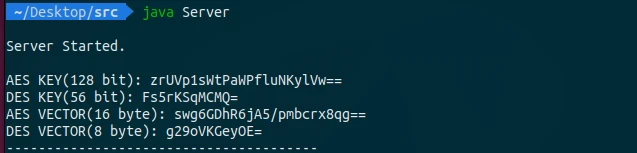
CryptMe is a secure client-server messaging application built entirely in Java. It demonstrates practical cryptography in a real-time chat setting: users connect to a central server with unique usernames, join a shared chat room, and exchange messages encrypted with their choice of symmetric algorithm — AES (128-bit) with a 16-byte initialization vector, or DES (56-bit) with an 8-byte IV.
When a user selects an encryption method, the application generates a fresh secret key and IV for that session and distributes them to participants. The server handles connection management and message routing over TCP sockets without reading plaintext, while the Swing GUI client performs all encryption and decryption locally. A persistent log file records every generated key and IV for auditability.
Core Features
- Dual encryption modes selectable at runtime — AES or DES
- Multi-user chat with unique username registration and disconnect handling
- Socket-based server routing encrypted payloads between connected clients
Tech Stack
Scholarly Journey
Academic milestones that built my software, data, and ML foundations.
Master of Science - Computer Science and Engineering
Sep 2024 — Present Milan, ItalyI am currently doing my Master's with a strong focus on Cloud Computing and Big Data. Most of my effort goes into distributed systems, scalable infrastructure, and hands-on technical projects where I can turn theory into practical solutions for complex, real-world software problems in production settings and large-scale platforms.
During my bachelor's, I focused mainly on Machine Learning, Computer Vision, and Software Engineering. My thesis work in computer vision later became my publication Tinysign (SIViP, 2024), and that process really strengthened how I approach programming, algorithms, and real problem-solving in practical engineering contexts and team delivery.
Erasmus+ Exchange Program
Sep 2019 — Feb 2020 Czestochowa, PolandI joined this Erasmus semester to improve my background in AI and Computer Vision in a completely new academic environment. Working in international project teams helped me become more adaptable, collaborative, and confident in technical communication across different cultures, academic expectations, and working styles in team settings.
Papers I'm Proud Of
Research focused on practical computer vision in low-resolution settings.
Tinysign: Sign Language Recognition in Low-Resolution Settings
Jun 2024Bilge, F.A., Hüseyinoǧlu, A., Bilge, Y.C. et al. Tinysign: sign language recognition in low resolution settings. SIViP 18, 6881–6890 (2024). DOI: 10.1007/s11760-024-03358-z
- Introduced the first benchmark for low-resolution sign language recognition.
- Addressed recognition in privacy-sensitive and low-bandwidth video scenarios.
- Proposed a novel pose-conditioned super-resolution architecture to reconstruct critical visual cues.
- Achieved 58.0% accuracy, outperforming the previous state of the art (35.0%) on the same dataset.
My Toolbox
Technologies and skills I use to build and run real production systems.
Programming Languages
Big Data & Machine Learning
Backend & APIs
Databases
Cloud & DevOps
Tools & Methodologies
Expertise Areas
These are the areas where I have spent the most hands-on time through professional work, research, and academic projects.
How I apply them
I connect these areas by designing end-to-end backend systems that ingest, process, and expose data with reliability and performance in mind. In practice, this means building stable APIs, scalable data pipelines, and cloud-native services that continue to work under real production pressure.
My strongest contributions are in projects where infrastructure, data engineering, and applied machine learning must operate together as one system. I focus on making these components measurable, maintainable, and ready for long-term use in production environments.
Engineering Insights
Here I share my thoughts, lessons, and experiences from software engineering.
Lessons Learned Building Distributed Systems for 600TB+ Analytical Workloads
A direct breakdown of what I learned running 600TB+ analytical workloads, including design mistakes, bottlenecks, and fixes that worked.
Operating Kubernetes Workloads Across 300+ Production Nodes: What Nobody Tells You
What actually breaks first at 300+ nodes and how I handled scheduling pressure, rollout risks, and cross-workload interference.
Why Observability Becomes More Important Than Code at Scale
How better observability changed my day-to-day engineering decisions, incident response quality, and reliability outcomes at scale.
Get in Touch
Whether you want to discuss an opportunity, collaborate on a project, ask about my research, or simply connect, I would be happy to hear from you.